



If you are an executive of an FDI enterprise, or are in the process of building your brand and entering the Vietnamese market, you may need to optimize your company’s operational regulations or establish a standardized set of internal rules that ensure effectiveness.
A notable reality is that many companies issue internal regulations, yet employees do not understand them, cannot recall them, or worse, do not comply with them. The gap between written policies and actual operations is a critical weakness, especially for multinational corporations where cultural and language differences can further intensify the issue. In this article, KMC experts provide detailed guidance on how to develop effective company operational regulations, along with key legal considerations that enterprises should take into account when establishing internal rules.
The importance of company operational regulations
Company operational regulations are not merely internal documents created to comply with tax authorities or inspections. For FDI enterprises, they serve as a key governance tool—a “mini-constitution” that governs all aspects of operations, from workflows and labor relations to corporate culture. From a legal perspective, these regulations are based on the Law on Enterprises 2020 and its guiding regulations, translating general legal provisions into enforceable internal rules. A well-structured set of regulations helps enterprises enhance procedural transparency, protect the legitimate rights and interests of both the company and employees, and create a stable, predictable working environment—an element highly valued by Japanese investors.
Core contents of company operational regulations
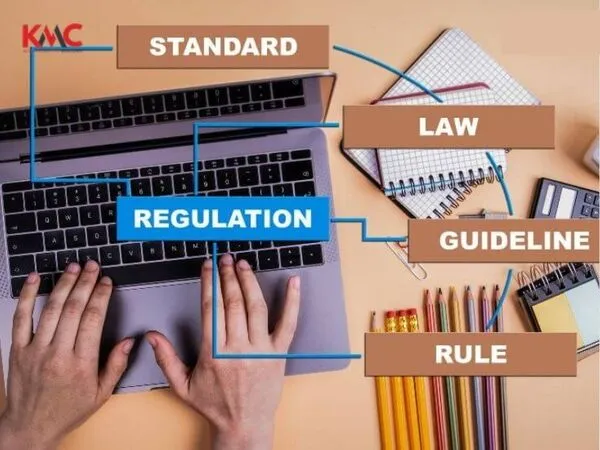
A comprehensive set of company operational regulations typically includes the following core contents:
General provisions
- Clearly state basic information such as: company name, scope of application, and applicable subjects.
- Define the objectives of the regulations, such as maintaining discipline, improving work efficiency, and ensuring all activities are conducted transparently, effectively, and in compliance with the law.
This section serves as a guideline to help all employees understand the purpose and importance of the company’s operational regulations.
Labor regulations
This is the core component of the company’s regulations, detailing:
- Working and rest time: Start and end times, break periods, annual leave, and public holidays in accordance with regulations.
- Prohibited behaviors in the workplace: For example, smoking in restricted areas, use of prohibited substances, disclosure of internal information, etc.
- Occupational safety and fire prevention: Guidelines on protective equipment, safety rules in operating machinery, and emergency evacuation procedures.
Operational procedures
This section specifies how internal processes are carried out and coordinated to ensure consistency and efficiency:
- Organizational structure and allocation of responsibilities: Clearly define roles of each department and position.
- Inter-departmental coordination procedures: Ensure information flow and avoid overlap or omissions in tasks.
- Handling of urgent situations: Identify responsible persons, reporting procedures, and action steps to ensure business continuity.
Reward and disciplinary policies
This section helps motivate employees while maintaining discipline:
- Criteria for rewards: Including work performance, attitude, teamwork, and contributions.
- Disciplinary measures: Reprimand, warning, suspension, or termination depending on the severity of violations.
- Implementation procedures: Decision-making process, notification to the employee, and the right to appeal.
Confidentiality regulations
Ensure information security for the enterprise:
● Categories of confidential information: Including customer data, financial data, trade secrets, and key contracts.
● Employee responsibilities: Maintaining confidentiality during and after employment.
● Handling violations: Application of internal disciplinary measures or legal actions in case of serious damage.
Guidelines for developing effective and legally compliant company regulations
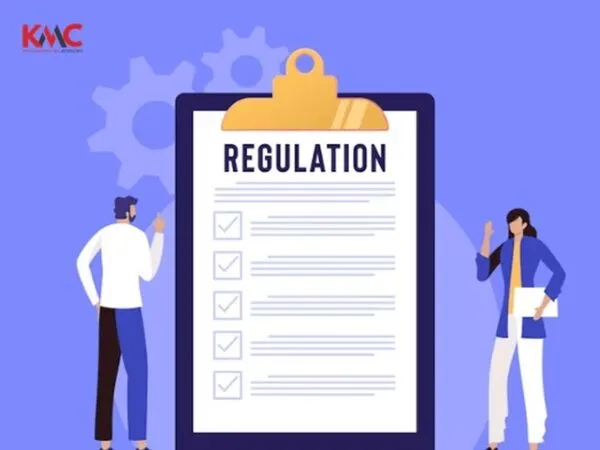
The process of developing company operational regulations typically includes the following five key steps:
Step 1: Identify needs and scope
- Identify needs: Analyze existing issues within the enterprise to determine which regulations should be prioritized.
- Define objectives: Determine which areas the regulations will cover (HR, finance, workflows, labor rules, etc.).
- Identify applicable subjects: From all employees to specific departments and management levels.
Step 2: Draft regulations in compliance with laws
- Legal compliance: Regulations must comply with current legal frameworks such as the Labor Code, Law on Enterprises 2020, and Law on Accounting.
- Clarity and specificity: Use simple, clear, and understandable language. Provisions should be specific, measurable, and easy to implement and evaluate.
- Feasibility: Regulations must align with the enterprise’s characteristics and resources. Even well-designed rules are ineffective if they cannot be applied in practice.
- Clear allocation of responsibilities and authority: Define responsibilities of individuals and departments in implementation and supervision.
Step 3: Consultation and finalization
- Collect feedback: Circulate the draft regulations to relevant departments and employees for input and adjustments. For labor rules, consultation with the Trade Union Executive Committee is required.
- Finalize draft: Revise and complete the regulations based on feedback received.
Step 4: Approval and issuance
- Official issuance: The company’s management approves and issues the regulations.
- Internal communication: Regulations must be disseminated to all employees.
- Documentation retention: Store signed and stamped originals as legal references when necessary.
- Periodic review and revision (typically annually): Ensures consistency, smooth operation, and alignment with actual conditions and updated legal requirements.
Note: Internal labor regulations for companies with 10 or more employees must be registered with the provincial or district-level labor authority.
Common mistakes when developing company operational regulations

During the process of drafting and establishing company regulations, many enterprises still make common mistakes that reduce effectiveness and even create legal risks, including:
● Mechanical copying from other companies: Instead of carefully analyzing and designing regulations tailored to their own scale and operations, some enterprises simply copy from others without proper adjustment. This leads to impractical content that is not suitable for actual implementation.
● Failure to update new legal regulations: Laws and regulations are frequently updated. If enterprises do not promptly update changes in the Labor Code, Law on Enterprises 2020, or related decrees, their internal regulations can quickly become outdated and even non-compliant.
● Unclear and overly complex language: Using complicated legal terminology without proper explanation makes it difficult for employees to understand and may lead to misinterpretation. This is especially common in FDI enterprises where cultural and language differences can amplify misunderstandings.
● Lack of proper communication: Even well-developed regulations may fail if they are not effectively communicated to all employees, resulting in inconsistent application across the organization.
● Lack of periodic updates: Company regulations are most relevant at the time they are drafted. However, as enterprises evolve—expanding or downsizing—and as legal frameworks change, regulations can become outdated and no longer appropriate if not regularly reviewed and updated.
A poorly developed or outdated set of regulations, or one that conflicts with collective labor agreements, can lead to serious consequences. Enterprises may face administrative penalties from authorities. In labor disputes, courts or competent authorities may invalidate non-compliant provisions, putting the enterprise at a disadvantage. More importantly, unclear regulations can lead to internal conflicts, misalignment between departments, reduced productivity, and increased employee turnover.
Standard structure and mandatory provisions in company regulations for FDI enterprises

The structure of company operational regulations should reflect the specific characteristics of the enterprise type (LLC, JSC) and its business sector. However, for FDI enterprises, several provisions require special attention:
- Language provisions: Clearly define the official language of the regulations (typically Vietnamese) and specify that foreign language versions (such as Japanese) are for reference purposes. This helps avoid misunderstandings due to language differences.
- Decision-making and delegation procedures: Clearly outline the authority of the Members’ Council, Board of Directors, General Director, and management levels—especially for high-value transactions—in alignment with the governance principles of the parent company.
- Labor discipline and internal dispute resolution policies: These should be detailed, fair, and fully compliant with the Labor Code, as well as aligned with the corporation’s global code of conduct and ethical standards.
- Confidentiality, data security, and intellectual property protection: This is a top priority for technology companies or innovation-driven enterprises, particularly those from Japan.
KMC has provided a comprehensive guide on developing company operational regulations, especially highlighting key considerations for FDI enterprises.
As a leader or manager of an FDI enterprise in Vietnam, if you encounter any difficulties in the process of building company regulations or require in-depth consultation on legal matters related to internal policies, please contact KMC—a firm specializing in providing tax, accounting, and legal solutions for FDI enterprises, particularly Japanese-invested companies.
We offer detailed, professional guidance and deliver comprehensive solutions, from HR advisory to the development of standardized operational regulations that ensure full legal compliance for FDI enterprises.
For expert consultation, please contact our hotline: 081 489 4789.
