



Understanding the types of business licenses is an important foundation for FDI enterprises to complete full business registration procedures and ensure compliance with Vietnamese law. In this article, KMC provides a comprehensive and detailed overview of the current types of business licenses. In particular, it offers precise guidance for FDI enterprises when carrying out business registration and company incorporation, helping investors avoid unnecessary legal risks and build a solid business foundation.
Overview of Business Registration and Licensing
According to Clause 4, Article 3 of Decree 98/2020/ND-CP, a “business license” is defined as “licenses, certificates of eligibility, professional liability insurance certificates, written confirmations, and other forms of documents prescribing the conditions that individuals or organizations must satisfy in order to carry out investment and business activities, issued by competent state authorities in accordance with the law.”
In simple terms, a business license is a legal certification proving that an enterprise is permitted to commence production and business activities in accordance with the registered and approved business lines.
Normally, a business license is issued after the establishment of the enterprise and after obtaining the Enterprise Registration Certificate.
In cases where the business license is lost or damaged, the enterprise may face difficulties during inspections by competent authorities and may be unable to carry out legal procedures that require a business license (such as bank financing, telecommunications service registration, etc.). In such cases, the enterprise should promptly apply for a re-issuance of the business license to ensure smooth business operations and legal compliance.
Types of business licenses currently in use
Business licenses consist of two main categories: the Enterprise Registration Certificate or Business Household Registration Certificate (a mandatory requirement for all enterprises), and sector-specific or conditional business licenses (sub-licenses).

Enterprise Registration Certificate (ERC)
The Enterprise Registration Certificate is a document recognizing the legal existence of a company and establishing its legal entity status. This is a mandatory document for all companies and enterprises.
The Enterprise Registration Certificate is further divided into three main types:
- Business household registration certificate: For individuals/groups of individuals conducting small-scale business activities, issued by the District-level People’s Committee.
- Enterprise Registration Certificate: For companies (LLC, Joint Stock Company, Sole Proprietorship, etc.), issued by the Department of Planning and Investment.
- Certificate of branch/representative office registration: For business expansion locations.
Sector-specific business licenses / Sub-licenses (Conditional Business Licenses)
Sub-licenses are a diverse and complex group of licenses issued for conditional business lines to ensure security and safety.
Common types of sub-licenses include:
- Food safety and hygiene certificate: For restaurants, food production and catering services.
- Security and order eligibility certificate: For karaoke businesses, accommodation services (hotels), pawn services.
- Fire prevention and fighting (PCCC) certificate: For high-rise buildings, warehouses, and production facilities with fire risk.
- Commercial sector licenses: For alcohol, tobacco, and petroleum trading.
- Other licenses: Travel service license, medical or education operation license.
Investment Registration Certificate (IRC) – For FDI enterprises/foreign investors
The Investment Registration Certificate is required for foreign investors when establishing a company in Vietnam for the first time.
This certificate confirms that the investment project of the foreign investor has been approved by the competent state authority. It specifies the objectives, scale, location, and incentives (if any) of the project.
For FDI enterprises, the usual sequence is: obtaining the Investment Registration Certificate (IRC) first, followed by the Enterprise Registration Certificate (ERC). Sub-licenses are applied for after company establishment, depending on the specific business lines.
Classification of sub-licenses by specific business sectors

Depending on the business sector, enterprises may need to obtain additional specific sub-licenses. Below, KMC provides an overview of common sub-licenses applicable to major business industries:
- Manufacturing & processing: In addition to the IRC and ERC, enterprises may need to obtain a Food Safety and Hygiene Certificate (if involved in food production), waste discharge permits, fire prevention and fighting (PCCC) certificates, as well as registration for barcodes and intellectual property rights.
- Trading & distribution: Foreign-invested enterprises in certain commercial sectors may require specific licenses. In particular, the import and distribution of specialized goods (such as pharmaceuticals, chemicals, and medical devices) require sector-specific licenses issued by the Ministry of Industry and Trade or the Ministry of Health.
- Consulting services & information technology: Requirements for sub-licenses are generally less complex; however, enterprises must pay attention to cybersecurity-related licenses if operating in areas such as online gaming, social networks, or telecommunications services.
- Logistics services: This is a sector of strong interest to Japanese enterprises. Required licenses may include a multimodal transport business license, warehouse operation permits, and safety certifications for maritime or aviation operations.
For in-depth consultation on business licenses and sector-specific sub-licenses, please contact KMC experts directly for detailed, accurate, and comprehensive advisory support.
Conditions and procedures for obtaining a business license for FDI enterprises

Conditions for foreign investors to be granted a business license
The conditions for foreign investors to obtain a business license in Vietnam are specifically regulated under Article 9 of Decree 09/2018/ND-CP as follows:
- Foreign investors from countries or territories that are members of treaties to which Vietnam is a party:
- Meeting market access conditions under the relevant international treaties to which Vietnam is a member
- Having a financial plan to implement the business activities for which the Business License is requested
- No overdue tax debts in cases where the investor has established a business presence in Vietnam for 01 year or more
- Foreign investors from countries or territories that are not members of treaties to which Vietnam is a party:
- Having a financial plan to implement the business activities for which the Business License is requested
- No overdue tax debts in cases where the investor has established a business presence in Vietnam for 01 year or more
- Compliance with relevant sector-specific regulations
- Compatibility with the competitiveness level of domestic enterprises in the same business sector
- Ability to create employment for domestic workers
- Contribution capacity and level of contribution to the state budget
Business registration procedure for foreign investors
After understanding the required types of business licenses, we will now explore in detail the company incorporation procedure.
The basic business registration process for foreign investors includes the following steps:
- Preparation of documents: This is the most important step, requiring in-depth legal expertise to avoid omissions. Documents must be translated, notarized, and consular legalized where required.
- Submission of application: Depending on the type of license, the dossier is submitted to the Investment Registration Authority, Department of Planning and Investment, or specialized ministries (Ministry of Industry and Trade, Ministry of Health, Ministry of Natural Resources and Environment, etc.).
- Receipt and appraisal: The competent authority will review the legality and validity of the dossier and may request supplementation if necessary.
- Issuance of license: If the dossier is complete and meets all conditions, the authority will issue the license. Processing time ranges from 10 to 45 working days, or longer depending on complexity.
Update of the latest 2026 regulations and trends in administrative procedure simplification

The Government of Vietnam has been continuously reforming administrative procedures to improve the investment environment. As of 2026, numerous new decrees and guiding circulars have been issued to shorten processing timelines and enhance transparency in licensing procedures. A notable trend is the integration and automation of processes on the National Business Registration Portal and the National Single Window Information System.
In particular, for certain industries and investment scales, exemption policies or significant procedural simplifications are applied. For example, investment projects in priority sectors or located in economic zones and industrial parks may benefit from a “single-window inter-agency mechanism,” thereby reducing the number of required sub-licenses. However, FDI enterprises should note that these incentives are often subject to binding conditions relating to technology requirements, capital scale, and project implementation timelines.
Legal risks & penalties for operating without a valid business license
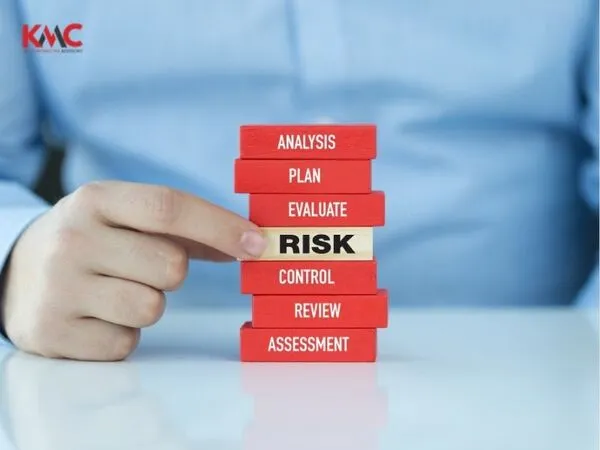
Operating a business without full and valid business licenses, or violating the conditions stated in the license, constitutes a serious breach of law. The consequences may include:
- Administrative penalties: Substantial monetary fines may be imposed, potentially reaching billions of VND depending on the severity of the violation and the business sector.
- Suspension of operations: Competent authorities may suspend part or all of the infringing activities until the enterprise remedies the violation and obtains the required licenses.
- License revocation: In cases of serious violations or repeated non-compliance, the Enterprise Registration Certificate (ERC) or sub-licenses may be revoked.
- Criminal liability: In certain cases involving particularly severe consequences (e.g., environmental pollution, smuggling), related individuals may be subject to criminal prosecution.
- Reputational damage: Public disclosure of penalties can significantly damage brand reputation and business relationships, which is especially critical for Japanese enterprises that place strong emphasis on compliance and corporate reputation.
Frequently asked questions about “business licenses for FDI enterprises”
Can FDI enterprises conduct business in all sectors?
No. The Law on Investment stipulates a list of prohibited business lines and conditional business lines applicable to foreign investors. Investors must carefully review this list before making investment decisions.
What is the validity period of the Investment Registration Certificate (IRC) and sub-licenses?
The IRC is generally valid for the duration of the investment project, which may be 50 years or longer. Sub-licenses have shorter validity periods, typically ranging from 3 to 10 years, and must be renewed before expiry.
What should enterprises do when changing business lines or location?
Any such significant changes require procedures to amend the Investment Registration Certificate (IRC) and/or the Enterprise Registration Certificate (ERC). At the same time, obtaining new or updated relevant sub-licenses is also mandatory.
Is there a major difference in licensing procedures between FDI enterprises and domestic enterprises?
Yes. FDI enterprises must go through the Investment Registration Certificate (IRC) issuance process—a more complex procedure requiring more documentation and longer appraisal time compared to the standard enterprise registration process for domestic companies.
Professional legal advisory – Comprehensive support for business registration for foreign investors
Above, KMC has provided a detailed and comprehensive explanation of the current types of business licenses and guidance for foreign investors.
In practice, from the very first step of business registration, foreign investors often face significant challenges in preparing documentation and ensuring full legal compliance. Therefore, instead of handling the entire process independently, choosing a professional advisory firm has become the optimal solution preferred by most enterprises and investors.

With extensive experience in providing legal advisory and support services to hundreds of FDI enterprises, especially Japanese companies in Vietnam, KMC fully understands the challenges and difficulties you are facing. We provide a professional and comprehensive service package for FDI enterprises, including:
- Strategic advisory and detailed guidance on all required conditions and factors for establishing a new company
- Preparation and drafting of complete and accurate business registration dossiers
- Representation of investors in submitting dossiers and monitoring the registration process
- In-depth advisory on sub-licenses and full support for sub-license application procedures
- Advisory and implementation of Investment Registration Certificate (IRC) procedures for foreign contractors
- Post-establishment legal support services (upon request)
With a team of experienced lawyers and experts with in-depth knowledge of legal requirements for company establishment procedures, KMC helps you save time, minimize risks, and ensure full compliance with Vietnamese law in all business activities.
Are you ready for comprehensive and in-depth consultation on business registration and company incorporation? Contact KMC hotline: 081 489 4789 for prompt expert support.
