


Human resources and the labor force are among the most important factors for managers and HR directors when deciding whether to invest in a country. As one of today’s key labor markets, Vietnam, with its abundant and high-quality workforce, has become a top choice for many developed countries worldwide. In this article, experts from KMC will provide an in-depth analysis of the potential and advantages of Vietnam’s current workforce. Discover the core strengths that are strongly attracting multinational corporations, especially from Japan, to invest in the Vietnamese market.
8 Advantages of Vietnam’s Human Resources Today
Vietnam is regarded as a highly attractive destination for both domestic and foreign investors, primarily due to its competitive advantages in labor resources. Vietnam’s human capital presents the following notable strengths:
Extensive and youthful labor force base with abundant human capital supply
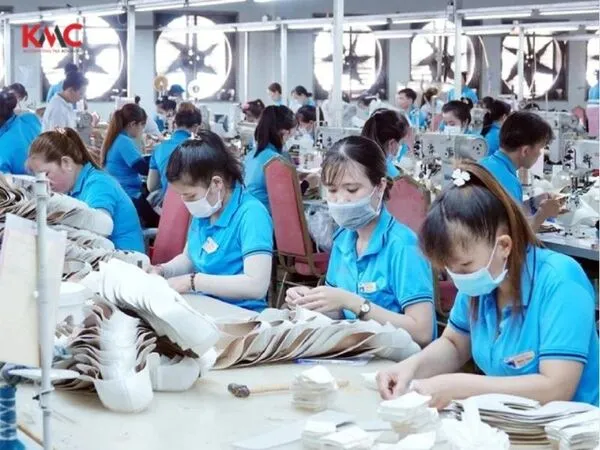
With a population exceeding 100 million, of which more than 60% are of working age (2025), Vietnam possesses an exceptionally large labor market. In particular, the young labor force (aged 15–34) accounts for a significant proportion, providing dynamism, strong learning agility, and high adaptability to technological changes. This represents a key competitive advantage compared to many countries facing population aging. Such abundant human capital ensures a stable and long-term labor supply for investment projects, ranging from large-scale manufacturing operations to research and development (R&D) centers.
Continuous Upgrading of Workforce Quality
One of the key advantages of Vietnam’s human resources today, which is increasingly attracting attention in the labor market, is the continuous enhancement of workforce quality. Beyond basic labor, the quality of Vietnam’s human capital is steadily being upgraded to meet the increasingly stringent requirements of enterprises and the labor market.Vietnam’s workforce is widely recognized for being intelligent, skillful, and industrious. In addition, the professional competency of the workforce continues to improve as market competition intensifies.
- High educational attainment and strong learning orientation: The adult literacy rate in Vietnam exceeds 95%. The higher education and vocational education system has expanded significantly, producing hundreds of thousands of graduates annually in engineering, information technology, business administration, and foreign languages. This serves as a critical foundation for enterprises to develop a high-quality talent pipeline.
- Highly regarded IT and technical capabilities: Vietnam is regarded as an emerging “IT powerhouse” in Asia. Vietnamese programmers and software engineers are consistently rated highly in global rankings for technical proficiency and innovative capacity. Beyond the IT sector, mechanical, electrical, and electronics engineers are also systematically trained with solid technical skills, effectively meeting the demands of high-tech manufacturing and assembly industries.
Labor productivity has been on an upward trend, showing continuous improvement over time.
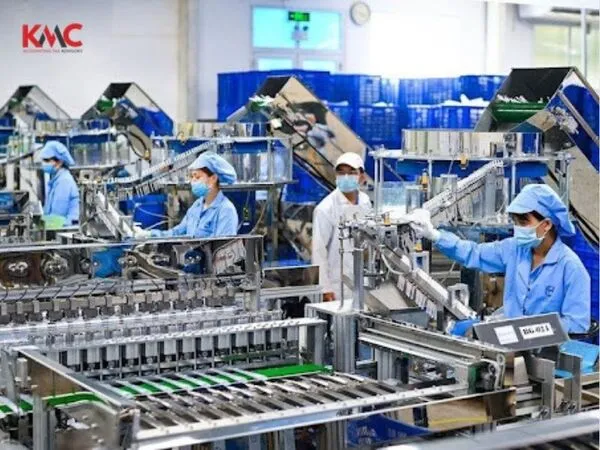
Vietnam’s labor productivity has shown an upward trend year by year. Currently, Vietnam is among the countries with the highest labor productivity growth rates in the ASEAN region. According to the General Statistics Office, Vietnam’s labor productivity in 2025 is estimated at VND 245 million per worker, representing an increase of 6.83% compared to 2024. The proportion of trained workers holding diplomas or certificates reached 29.2%, up by 0.8% compared to 2024.
Compared to 2018, when labor productivity was recorded at VND 102 million per worker, these figures demonstrate the significant advancement of Vietnam’s labor market.
Competitive labor costs – budget optimization
One of the key advantages of Vietnam’s current labor force highly valued by FDI enterprises is its competitive labor cost. Compared to regional countries such as China, Thailand, and Malaysia, the cost of hiring both unskilled and skilled labor in Vietnam remains at a reasonable level. This enables enterprises to significantly reduce operating costs, enhance their competitiveness in the global market, and allocate a larger portion of their budget to training and in-depth workforce development.
Diligence, hard work, and adaptability
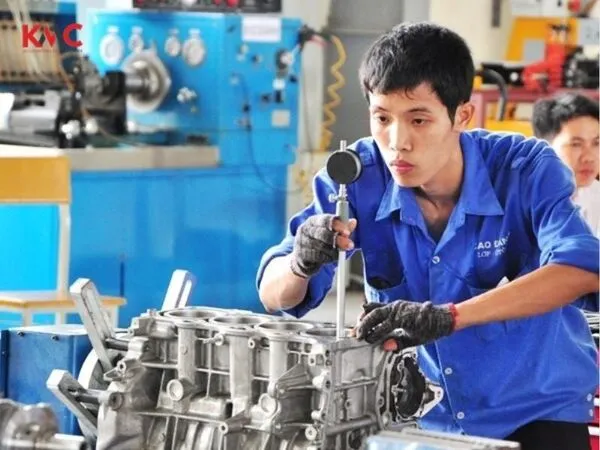
Vietnam’s labor culture is characterized by diligence, perseverance, and strong ability to work under pressure. Employees demonstrate a high sense of responsibility and are willing to fulfill assigned tasks. Moreover, in a volatile business environment, the ability of Vietnamese personnel to adapt quickly and remain flexible is a significant advantage, enabling enterprises to overcome challenges and effectively seize new opportunities.
Work culture compatible with FDI enterprises, particularly Japanese FDI enterprises
Vietnamese people demonstrate respect for discipline, hierarchical structures, and a strong emphasis on collective spirit, which are important factors influencing work efficiency and quality. Diligence, meticulousness, and loyalty are also highly valued traits. These characteristics have contributed to the success of thousands of FDI enterprises in Vietnam, ranging from automotive and electronics manufacturing to service industries. This is particularly evident among enterprises from Japan, a country that shares many cultural similarities with Vietnam.
Government policies supporting and orienting human resource development

In addition to the current advantages of Vietnam’s labor force, one of its strong competitive strengths also comes from the investment and development policies of the Government and the State.
The Government of Vietnam consistently implements favorable policies to improve the quality of human resources, such as prioritizing vocational training, cooperating with foreign corporations in workforce training, and reforming the education system toward practical application. Human resource training programs for supporting industries and high-tech sectors are being strongly promoted, thereby creating a workforce that directly meets the needs of FDI enterprises.
Improving foreign language proficiency
English is becoming increasingly widespread, particularly among the younger generation and the intellectual workforce. The number of individuals proficient in English in the workplace is growing rapidly, eliminating communication barriers in international working environments. In addition, the number of people learning Japanese, Korean, and Chinese is also increasing significantly, creating favorable conditions for cooperation and direct management by foreign experts.
KMC – Providing optimized strategic human resource consulting solutions for FDI enterprises

In addition to its advantages, Vietnam’s labor force also has certain limitations, such as relatively lower foreign language proficiency compared to regional countries like Thailand, the Philippines, and Malaysia. Furthermore, there remains a significant disparity in labor quality across different regions.
Therefore, in order to develop a successful investment strategy and identify the appropriate workforce that matches business needs and operating conditions, FDI enterprises still need a thorough market research and analysis strategy.
With a team of experts who have in-depth knowledge of investment policies and investment attraction in Vietnam as well as the Vietnamese labor market, KMC has been providing specialized consulting services to support FDI enterprises seeking to invest, enter, and develop sustainably in Vietnam. We offer comprehensive support for FDI enterprises, including:
Market research and labor market analysis – in-depth consultation on the advantages of Vietnam’s current human resources
Full legal support related to investment and market expansion in Vietnam (establishment of subsidiaries, representative offices, manufacturing plants, etc.)
Long-term support for tax and accounting legal matters for enterprises
Therefore, if you are an executive or manager of a foreign enterprise planning to invest in the Vietnamese market, or if you are operating an FDI enterprise in Vietnam and require specialized legal and advisory support, please contact KMC via hotline: 081 489 4789.
