


A detailed guide on cases eligible for VAT refund in 2025, including key conditions and important notes for each case.
For enterprises, especially FDI enterprises, VAT refund cases and the associated risks of tax audits are of high concern. In this article, KMC provides a comprehensive and precise explanation of VAT refund cases, based on the latest legal documents. This guidance helps enterprises identify eligible subjects and obtain VAT refunds safely while minimizing legal risks.
Distinguishing “VAT Refund” from “Exemption from VAT Declaration and Payment”
Many enterprises, particularly newly established ones, still confuse these two cases:
- VAT Refund: This is the procedure in which the tax authority returns input VAT that the enterprise has paid but has not yet been fully deductible (pursuant to Article 13 of the Law on VAT). It is an administrative procedure requiring approval from the tax authority.
- Exemption from VAT Declaration and Payment: Applies to certain special cases (e.g., lending activities, capital transfers) where, under the law, the enterprise does not incur VAT obligations and therefore does not need to perform the VAT refund procedure.
Conditions for VAT Refund
To be eligible for a VAT refund, an enterprise must satisfy all of the following conditions:
- Have input VAT eligible for deduction.
- Calculate VAT under the deduction method.
- Open a bank account registered under the enterprise’s Tax Identification Number (TIN).
- Prepare and maintain accounting books and vouchers in accordance with current regulations.
- Submit the VAT refund procedures in compliance with the current law.
- Hold a Business Registration Certificate or Investment Registration Certificate and the enterprise seal.
Failure to meet any of the above conditions may cause difficulties in obtaining a VAT refund or may result in refusal by the tax authorities.
Cases Eligible for VAT Refund under the Latest Regulations (2025)
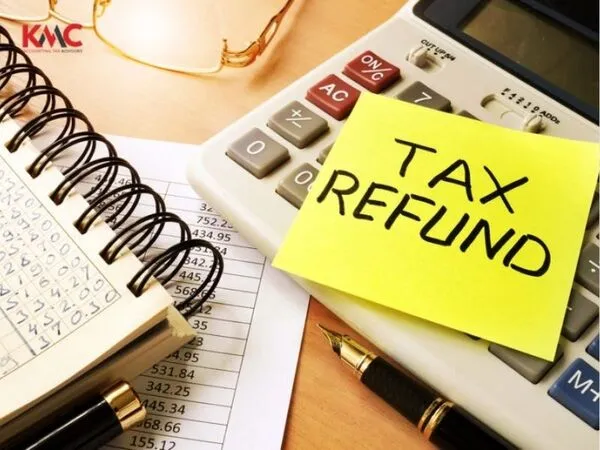
The following is a detailed list of cases eligible for VAT refund, updated in accordance with current legal documents, including the Law on VAT and Circular 80/2021/TT-BTC. Each case is referenced with the applicable legal clause to ensure full legal compliance.
1. Enterprises with Undeducted Input VAT
Pursuant to Article 13 of the Law on VAT, enterprises are eligible for VAT refund if:
- Input VAT that has not been deducted exceeds VND 300 million (Clause 1, Article 13).
- Or, after deducting VAT, there remains undeducted input VAT and the enterprise requests a refund (commonly applies to newly established enterprises or new investment projects in the early stage without revenue).
2. Enterprises with Investment Projects
According to Clause 2, Article 13, enterprises are eligible for VAT refund for investment projects if:
- The project belongs to an encouraged sector or investment location under the Investment Law.
- Input VAT for the project has not been fully deducted and satisfies specific conditions regarding the timing of refund.
Practical example: A Japanese company invests in constructing an auto parts factory at the Vietnam – Singapore Industrial Park (VSIP). All input VAT incurred from purchasing machinery and constructing the factory, if not fully deductible, may qualify for a VAT refund.
3. Export Activities of Goods and Services
Enterprises engaged in exporting goods or services are eligible for a VAT refund for input VAT directly related to export activities if the input VAT has not been fully deducted (Clause 1, Article 13).
Illustrative example: Enterprise B exports a textile shipment worth USD 500,000. Total input VAT for raw materials, transportation, and packaging amounts to VND 2 billion. If this VAT has not been fully deducted, Enterprise B has the right to request a VAT refund.
4. Other Special Cases
- Change of ownership, mergers, consolidations, splits, dissolution, or bankruptcy: Upon termination of operations, if there remains undeducted input VAT, the enterprise may be considered for a refund.
- Foreigners or Vietnamese residents abroad: When exiting Vietnam, if purchasing goods domestically and carrying them out of the country, they may be eligible for a VAT refund under the tourist VAT refund policy.
Cases Not Eligible for VAT Refund
Enterprises should also be aware of the following cases where VAT refund is not allowed:
- Invalid or unlawful VAT invoices.
- Goods or services purchased for producing or trading in VAT-exempt goods/services (except for exports).
- Input VAT for fixed assets used simultaneously for taxable and non-taxable activities, where the enterprise cannot separately account for VAT.
- Enterprises under tax audit or inspection for violations of tax law.
Risks of Pre-Refund VAT Inspection and Effective Mitigation Measures

For all enterprises, concerns regarding tax risks and VAT refunds remain a top priority. Not every refund application is approved immediately; some enterprises may fall under the category of “inspection first, refund later.” To manage the inspection process and minimize risks, enterprises need to prepare carefully.
Indicators of High Risk for Tax Inspection
As a manager, you need to identify whether your enterprise is at risk of inspection regarding VAT refunds. High-risk cases typically include:
- Newly established enterprises: Especially within the first 12 months, requesting a large VAT refund.
- Suspicious transactions: Transactions with entities that show signs of issuing unlawful invoices or non-genuine transactions.
- First-time VAT refund with a large amount: Refund amount significantly higher than the business scale or sector.
- Sensitive business sectors: Industries prone to VAT fraud, such as trading and intermediary goods sales.
Preparation for a Smooth Inspection Process
Thorough preparation not only helps pass the inspection safely but also shortens the waiting time for VAT refund. Enterprises should prepare the following:
- Complete original documents: Keep all original VAT invoices, economic contracts, bank payment vouchers, and delivery notes carefully.
- Clear and transparent accounting books: Ensure all accounting records match the financial statements and tax returns.
- Logical explanation of transaction relationships: Be ready to explain the nature, content, and authenticity of transactions generating input VAT.
- Close cooperation with tax authorities: Appoint qualified personnel to coordinate, provide timely and complete information as requested by the inspection team.
Frequently Asked Questions on VAT Refund
In addition to cases eligible for VAT refunds, there are also many other frequently asked questions about VAT that attract attention.
How long does it take to process a VAT refund?
- According to regulations, the maximum processing time is 6 working days from the date of receiving a complete and valid application for the refund first, inspection later cases.
- For inspection first, refund later cases, the time may be longer depending on the complexity of the documents and the scope of inspection (Clause 24, Circular 80/2021/TT-BTC).
What documents are required for a VAT refund application?
The basic documents include:
- VAT declaration form
- Written request for refund
- List of purchased goods and services invoices
- Allocation table of input VAT (if any)
- Other relevant supporting documents
For a complete checklist, enterprises can refer to the official VAT refund documentation guide
Special considerations for FDI enterprises:
- Ensure the legal validity of contracts and transactions, especially regarding technology transfer, international payments, and specific investment incentives.
- All transactions must be documented clearly and comply with Vietnamese law.
VAT Refund Services: Comprehensive Professional Solutions from Experts

VAT refund remains a challenging procedure for the tax and accounting departments of enterprises, especially for FDI companies.
If your enterprise is facing difficulties in completing VAT refund procedures and you wish to engage a professional unit to advise, guide, prepare documents, and handle refund procedures on your behalf quickly, accurately, and in full compliance with the law, contact KMC. We provide professional consultation, accompany your business throughout the process, and deliver a comprehensive solution.
As a provider of professional and comprehensive tax-accounting services for FDI enterprises, KMC’s experienced specialists support enterprises in the full spectrum of VAT refund services, including:
- Detailed consultation and guidance on eligible VAT refund cases and related legal regulations
- Preparation and drafting of complete refund dossiers
- Representing the enterprise in dealings with tax authorities
- Monitoring progress to ensure the refunded amount is transferred to the enterprise’s bank account promptly
With extensive experience and expertise, KMC offers enterprises a professional VAT refund solution that:
- Optimizes time
- Reduces costs
- Minimizes risks of tax reassessment and administrative penalties
For immediate expert consultation, contact KMC at hotline: 081 489 4789.
