


How many accounting standards exist in Vietnam? In this article, KMC’s experts provide a comprehensive explanation of the current Vietnamese Accounting Standards (VAS), including the full system of 26 standards and their practical application for foreign-invested enterprises (FDI enterprises).
What Are Accounting Standards?
According to Article 7 of the Law on Accounting 2015:
- Accounting standards consist of fundamental principles and accounting methods used for preparing financial statements.
- Codes of ethical conduct for accountants include regulations and guidelines on the principles and application of ethical standards applicable to accountants, practicing accountants, accounting service enterprises, and household businesses providing accounting services.
- The Ministry of Finance promulgates accounting standards and codes of ethics for accountants based on international accounting standards, taking into account Vietnam’s specific conditions.
In simpler terms, accounting standards are the basic regulations and methods governing the preparation of financial statements. These standards are issued by the Ministry of Finance.
How Many Accounting Standards Are There? Complete List of the 26 Vietnamese Accounting Standards (VAS)
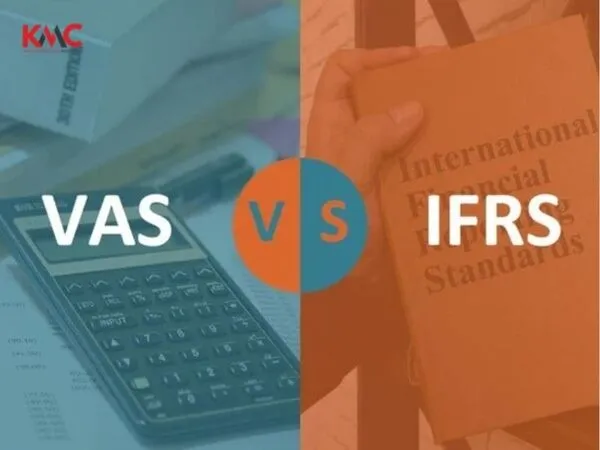
The current Vietnamese Accounting Standards (VAS) consist of 26 standards issued by the Ministry of Finance across five phases from 2000 to 2005.
On 31 December 2001, the Minister of Finance issued Decision No. 149/2001/QĐ-BTC promulgating four (04) Vietnamese Accounting Standards:
- VAS 02 – Inventories
- VAS 03 – Tangible Fixed Assets
- VAS 04 – Intangible Fixed Assets
- VAS 14 – Revenue and Other Income
Phase 2
On 31 December 2002, the Minister of Finance issued Decision No. 165/2002/QĐ-BTC promulgating six (06) Vietnamese Accounting Standards:
- VAS 01 – Framework for the Preparation and Presentation of Financial Statements
- VAS 06 – Leases
- VAS 10 – The Effects of Changes in Foreign Exchange Rates
- VAS 15 – Construction Contracts
- VAS 16 – Borrowing Costs
- VAS 24 – Cash Flow Statements
Phase 3
On 30 December 2003, the Minister of Finance issued Decision No. 234/2003/QĐ-BTC promulgating six (06) Vietnamese Accounting Standards:
- VAS 05 – Investment Property
- VAS 07 – Accounting for Investments in Associates
- VAS 08 – Financial Reporting for Interests in Joint Ventures
- VAS 21 – Presentation of Financial Statements
- VAS 25 – Consolidated Financial Statements and Accounting for Investments in Subsidiaries
- VAS 26 – Related Party Disclosures
Phase 4
On 15 February 2005, the Minister of Finance issued Decision No. 12/2005/QĐ-BTC promulgating six (06) Vietnamese Accounting Standards:
- VAS 17 – Income Taxes
- VAS 22 – Additional Disclosures for Banking and Similar Financial Institutions
- VAS 23 – Events After the Balance Sheet Date
- VAS 27 – Interim Financial Reporting
- VAS 28 – Segment Reporting
- VAS 29 – Changes in Accounting Policies, Accounting Estimates and Errors
Phase 5
On 28 December 2005, the Minister of Finance issued Decision No. 100/2005/QĐ-BTC promulgating four (04) Vietnamese Accounting Standards:
- VAS 11 – Business Combinations
- VAS 18 – Provisions, Contingent Liabilities and Contingent Assets
- VAS 19 – Insurance Contracts
- VAS 30 – Earnings per Share
Practical Examples: Journal Entries from Key Accounting Standards

Knowing how many accounting standards exist and their titles is only the first step. To understand each standard and apply them in practice—especially within FDI enterprises—requires practical experience and thorough guidance.
KMC would like to share some illustrative examples of applying Vietnamese Accounting Standards (VAS) in practice:
Example 1: Applying VAS 02 – Inventories
Scenario: XYZ Co., Ltd. (Japanese FDI) purchases 1,000 electronic components valued at VND 500 million (including 10% VAT) and stores them in inventory. At the end of the period, a physical count determines that the ending inventory value is VND 480 million.
Journal Entries:
Upon purchase:
- Debit Account 152: VND 455 million
- Debit Account 133: VND 45 million
- Credit Account 331: VND 500 million
Upon issuance to production (assuming full issuance):
- Debit Account 621: VND 455 million
- Credit Account 152: VND 455 million
At period-end, adjusting to actual inventory value:
- Debit Account 152: VND 25 million (480 – 455)
- Credit Account 632: VND 25 million
Compliance with VAS 02 ensures that the enterprise accurately records inventory at cost and reflects the correct value in the Balance Sheet.
Example 2: Applying VAS 03 – Tangible Fixed Assets
Scenario: An FDI company invests in a new machinery line worth VND 2 billion (excluding VAT) with an expected useful life of 10 years.
Journal Entries:
Upon purchase of fixed assets:
- Debit Account 211: VND 2 billion
- Debit Account 133: VND 200 million
- Credit Account 331: VND 2.2 billion
Monthly depreciation (straight-line method):
- Depreciation per month = 2 billion / (10 years × 12 months) ≈ VND 16.67 million
- Debit Account 627/642: VND 16.67 million
- Credit Account 214: VND 16.67 million
Applying VAS 03 ensures that assets are recorded at the correct value and depreciation is calculated properly, enabling accurate cost and profit reporting.
Why Are Accounting Standards Important for FDI Enterprises?
FDI enterprises must thoroughly understand Vietnamese Accounting Standards—including the number of standards, their content, and practical application. This ensures legal compliance in accounting and minimizes errors or potential issues.
Additionally, mastery of VAS helps FDI enterprises to:
- Enhance financial transparency: Build trust with shareholders, investors, and tax authorities.
- Facilitate global reporting consolidation: A standardized accounting system in Vietnam allows easier and more accurate consolidation with parent companies abroad.
- Provide a foundation for IFRS adoption: Proficiency in VAS is a key stepping stone towards implementing International Financial Reporting Standards (IFRS).
Professional Accounting Services for FDI Enterprises
Understanding how many accounting standards exist is essential, but their practical role and importance—especially for FDI enterprises—can be complex.

For FDI companies without specialized staff or accountants familiar with Vietnamese accounting regulations and standards, mastering and applying VAS in practice is challenging. That is why most foreign-invested enterprises—particularly Japanese and Korean companies—partner with professional firms to provide comprehensive tax and accounting solutions.
A partner with deep expertise in VAS, Vietnamese law, and international business culture ensures smooth operations, allowing the enterprise to focus on core activities while maintaining professionalism, accuracy, and compliance in accounting and tax procedures.
If you are managing an FDI enterprise in Vietnam and tasked with finding a professional tax and accounting service, contact KMC. We specialize in providing professional accounting and tax solutions, especially for Japanese FDI enterprises.
KMC has supported hundreds of enterprises in consulting, implementing, and fulfilling accounting and tax obligations. We assist FDI enterprises in transitioning to IFRS standards—an endeavor that, while challenging, provides long-term strategic benefits.
With our team of experienced accounting and auditing experts, we commit to delivering a comprehensive and professional accounting solution. We not only provide advice but also actively support enterprises in understanding, operating, and applying Vietnamese Accounting Standards accurately.
KMC has detailed the 26 Vietnamese Accounting Standards (VAS) and their key characteristics. For professional guidance or to engage a trusted accounting service, contact KMC via hotline: 081 489 4789 to receive consultation from our experienced accounting and auditing specialists.
